Search Engine Marketing: A Practical Guide for Businesses That Want to Be Found

Search Engine Marketing (SEM): A Practical Guide for Businesses

Think about the last time you needed something quickly, like a plumber, a laptop repair, or an accountant who works with small businesses. You probably typed a few words into a search box and clicked one of the first results. The businesses at the top were there because of a plan, and often because they paid to be there.

That plan is search engine marketing. This guide explains what it is, how it works, and what to think about before you spend your first rupee, dollar, or pound on it.

What Is Search Engine Marketing?

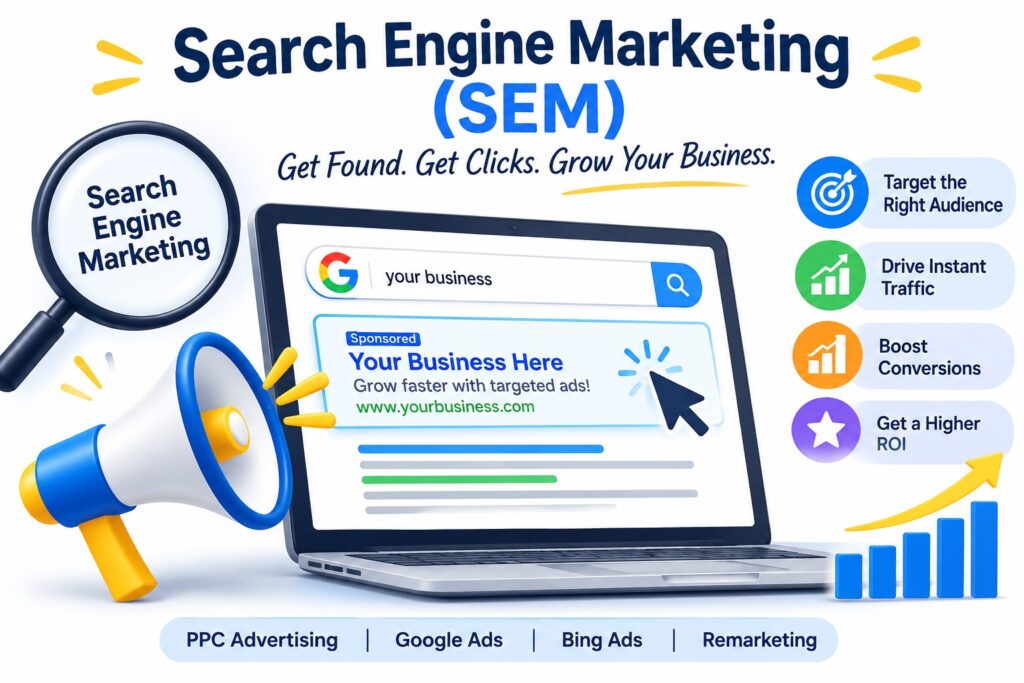
Search engine marketing (often shortened to SEM) is the practice of promoting your business through search engines, mainly with paid search ads. When someone searches for a phrase related to what you offer, your ad can appear alongside or above the regular results, marked as an ad.

Most SEM campaigns run on platforms like Google Ads and Microsoft Advertising. Most use a pay-per-click (PPC) model, so you pay when someone clicks your ad, not when it’s shown. Other bidding options exist, but PPC is the one most people start with.

The appeal is relevance. Your ad appears when a person is already looking for something like what you sell.

How Search Engine Marketing Works

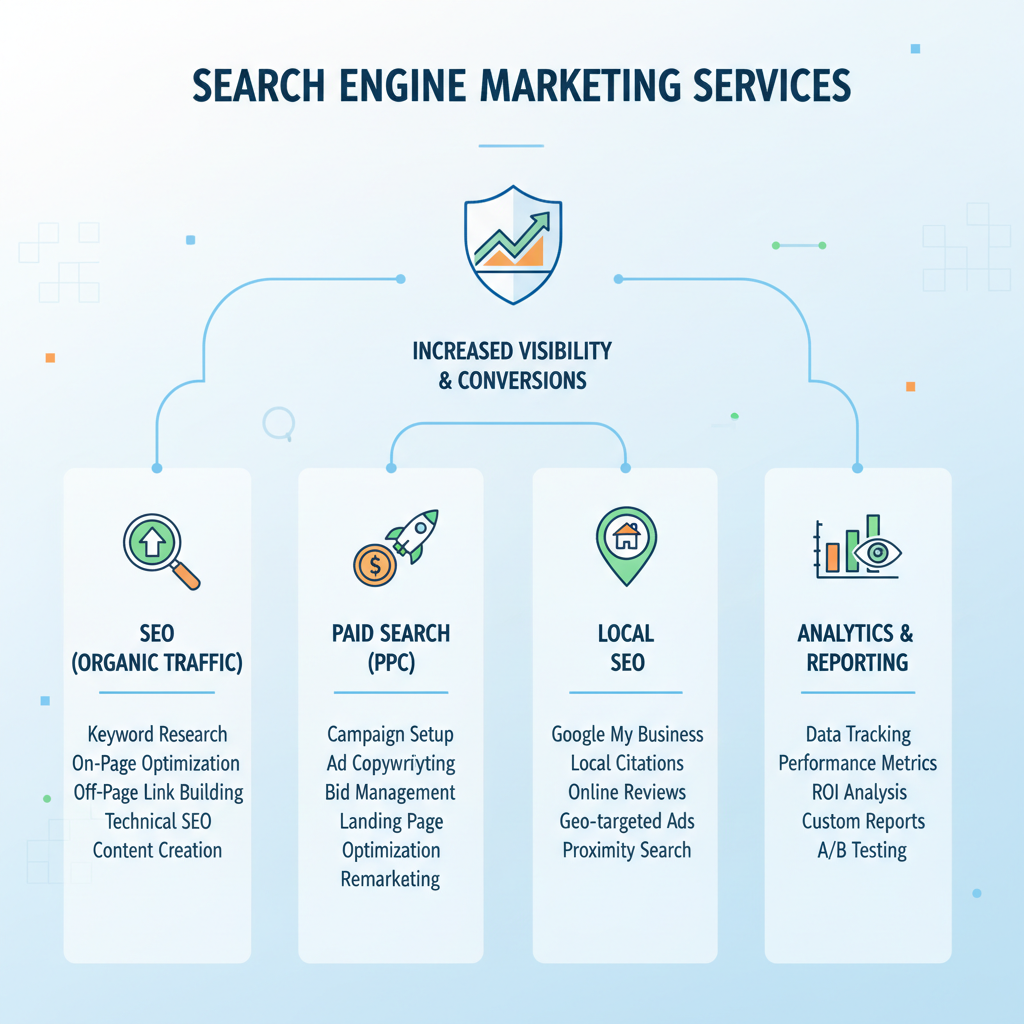
What is Search Engine Marketing Services

It helps to see SEM as three moving parts that work together.

Keywords and Search Intent

Every campaign starts with keyword research. You choose the words and phrases you want your ads to respond to, such as “emergency plumber in Chandigarh” or “accounting software for freelancers.”

Longer, more specific phrases usually show clearer intent. Someone searching “running shoes” may just be browsing. Someone searching “women’s trail running shoes size 7 waterproof” is probably closer to buying. A good campaign mixes both kinds and pays attention to which ones bring useful visitors.

The Ad Auction

Each time someone searches, the platform runs a quick auction to decide which ads show and in what order. Your bid matters, but it isn’t everything. The platform also looks at how relevant your ad and landing page are to the search, and how useful the experience is likely to be.

This means a bigger budget doesn’t automatically win. A well-built ad that matches what people want can compete against a larger spender.

Ads and Landing Pages

Your ad is the invitation, and your landing page is the room people walk into. If the ad promises a free quote and the page is a generic homepage, visitors leave and your money is wasted. The strongest ad campaigns keep a clear thread from the search phrase to the ad to the page to the action you want, whether that’s a call, a form, or a purchase.

Search Engine Marketing vs. SEO

The two get mixed up often, and they work best together.

 
 SEOPaid search (SEM)
Cost modelTime and effort invested in content and site qualityOngoing ad spend, usually per click
SpeedGradual; often takes months to buildAds can go live quickly
PlacementOrganic (unpaid) resultsMarked ad positions
ControlLess direct control over rankingsDirect control over budget, targeting, and messaging

Search engine optimization builds long-term visibility. Paid search gives you a way to show up sooner and test which messages and keywords bring results. Many businesses use SEM to learn what works, then apply those lessons to their organic content.

Why Search Engine Marketing Matters for Businesses

Done well, SEM offers some practical advantages:

  • Reach people with intent. You can show up when someone is actively searching for your product or service.
  • Start without a long wait. Unlike organic rankings, ads can begin appearing as soon as a campaign is approved and live.
  • Control spend. You set daily budgets and can pause or adjust campaigns at any time.
  • Target specific audiences. You can focus on certain locations, devices, languages, or times of day.
  • Measure what happens. With proper conversion tracking, you can see which keywords and ads lead to enquiries or sales.

None of this guarantees results. Outcomes depend on your market, competition, offer, website, and how well the campaign is managed.

What to Consider Before You Start

Budget Management

Decide what you can comfortably invest, then set daily limits to match. Costs per click vary widely by industry and keyword, and competitive terms can get expensive. It’s usually wiser to begin with a focused set of keywords and scale up once you see what’s working.

Performance Tracking

Clicks alone don’t tell you much. Set up conversion tracking so you know whether a click turned into a phone call, a sign-up, or a purchase. Metrics like click-through rate, cost per conversion, and return on ad spend help you judge whether a campaign is worth continuing. Review them regularly rather than waiting for the monthly bill.

Patience and Testing

The first version of a campaign is rarely the best one. Expect to refine keywords, rewrite ads, add negative keywords (terms you don’t want to trigger your ads), and adjust bids. Small, steady improvements tend to beat dramatic overhauls.

Common Mistakes Worth Avoiding

  • Targeting only broad keywords and paying for clicks that never had a chance of converting
  • Sending every ad to the homepage instead of a relevant landing page
  • Skipping conversion tracking and judging success by traffic alone
  • Setting up a campaign and never looking at it again
  • Expecting immediate profit without allowing time to learn from the data

Build a Search Engine Marketing Strategy That Fits Your Business

Search engine marketing rewards clear goals, careful budgeting, and steady attention. It isn’t magic, but it is one of the more transparent ways to see how your marketing money turns into real enquiries.

If you’d like a second pair of eyes on your current ad campaigns, or you’re starting from scratch, the team at WebXerox is happy to help. We’ll listen to your goals, walk you through realistic options, and build a search engine marketing strategy you can understand and track. Contact WebXerox [blocked] to start the conversation.

Frequently Asked Questions About Digital Marketing Services

Our Faq Now

General Ask For The Questions

Answer: Search Engine Marketing (SEM) is a digital advertising strategy that promotes websites by placing paid ads on search engine results pages. These ads appear when users search for specific keywords related to a product or service. SEM focuses on intent-driven visibility, allowing businesses to reach users who are actively looking for solutions.

Answer: SEM works by bidding on relevant keywords and displaying ads when users perform related searches. Advertisers pay only when someone clicks the ad. Campaign performance depends on keyword relevance, ad quality, landing page experience, and budget control. This approach helps businesses reach potential customers at the exact moment of search intent.

Answer: SEM uses paid advertising to gain immediate visibility in search results, while SEO focuses on organic rankings through content and technical optimization. SEM delivers faster results, whereas SEO builds long-term visibility. Many businesses use both together to balance short-term lead generation with long-term growth.

Answer: Yes, SEM can be suitable for small businesses because budgets and targeting can be controlled. Campaigns can focus on high-intent keywords, local searches, or specific services. When managed carefully, SEM allows small businesses to compete for visibility without requiring large upfront investments.

Answer: SEM can start generating traffic and leads as soon as campaigns go live. However, meaningful performance optimization usually takes several weeks. During this period, data is analyzed to refine keywords, ads, and targeting for better efficiency and consistent results.

Answer: The most widely used SEM platform is Google Ads, which covers Google Search and its partner networks. Other platforms include Microsoft Advertising (Bing Ads), which can offer lower competition in certain markets. Platform selection depends on audience behavior and business goals.

Answer: A successful SEM campaign depends on clear goals, accurate keyword targeting, relevant ad copy, and optimized landing pages. Ongoing monitoring and data-driven adjustments are essential to improve performance, control costs, and maintain relevance over time.

Answer: SEM and social media advertising serve different purposes. SEM targets users with active search intent, while social media ads focus on audience interests and behavior. SEM is often more effective for capturing demand, whereas social media is useful for awareness and engagement.

Partner With SEM Experts Who Deliver Results, Not Just Traffic

Capture high-intent searches instantly with professionally managed search engine marketing campaigns designed to scale your business faster.

Get My Free Proposal